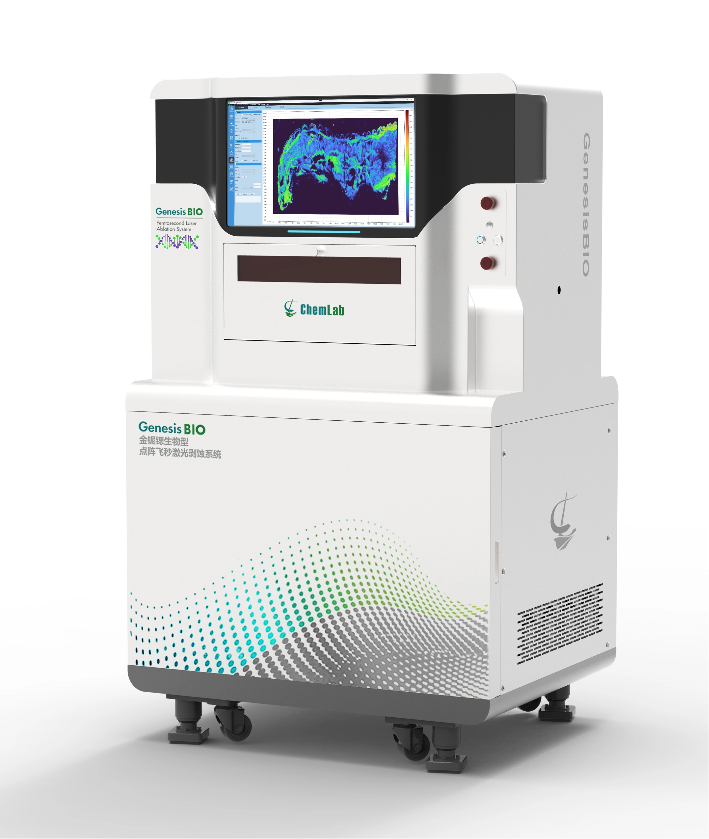


The GenesisBIO matrix-array femtosecond laser ablation system is independently developed by Shanghai Chemlab Instrument Co., Ltd. specifically for life science applications, representing a dedicated high-sensitivity and ultra-high-resolution elemental imaging system. Featuring innovative matrix-array femtosecond laser ablation technology, high-definition observation capabilities, and high-precision motion systems, equipped with a cryogenic ablation cell accessory suitable for direct ablation of various sample types. This system offers broad application prospects in life sciences, environmental science, food science, agriculture, and forestry research.
 技术特点
技术特点
Product Overview
The GenesisBIO system employs a 343 nm high-energy femtosecond laser, utilizing ultrashort pulses to effectively suppress plasma shielding and thermal diffusion, achieving "cold" ablation of biological samples. This fundamentally eliminates elemental fractionation and spatial information distortion caused by traditional nanosecond lasers, significantly enhancing the fidelity and quantitative reliability of sub-cellular level elemental imaging. The system features standard 500 nm to 500 µm continuously adjustable square spot sizes, and through unique "spot combination precision ablation" technology, achieves actual spatial resolution down to 200 nm at the methodological level. This enables "pixel-level" ablation at this scale, satisfying the ultra-high-resolution demands of biological imaging.
For high-throughput life science applications, GenesisBIO system integrates a dual-volume sample chamber and -40°C temperature-controlled cryogenic stage, capable of loading 12 standard microscope slides in a single batch for continuous automated detection of routine, fresh, or frozen biological samples. The ultra-fast purge system synergizes with the high repetition rate characteristics of femtosecond laser to achieve high-efficiency, high-spatial-resolution quantitative elemental imaging.
Furthermore, the system offers upgrade capability, supporting integration with Laser-Induced Breakdown Spectroscopy (LIBS) and Coherent Raman Spectroscopy (CARS/SRS) modules. This enables correlated imaging of elemental distribution, molecular structure, and chemical composition within the same micro-area, providing flexible and powerful technical support for multi-modal spatial omics research.
Four Major Pain Points of Traditional Biological Laser Ablation Systems
1. Spatial resolution limited to 1–2 µm, unable to distinguish sub-cellular organelles.
2. Manual sample exchange required for individual sections, daily throughput less than 20 slides, difficult to meet cohort sample demands.
3. Nanosecond laser thermal effects cause tissue carbonization, with elemental diffusion exceeding 500 nm.
4. Frozen sample transfer leads to frost formation, position offset, signal drift, and difficult relocation.
Key Technical Breakthroughs of GenesisBIO
1. 200 nm ultra-high spatial sampling resolution. Matrix-array femtosecond laser ablation technology significantly enhances detection sensitivity while achieving sub-cellular level spatial resolution.
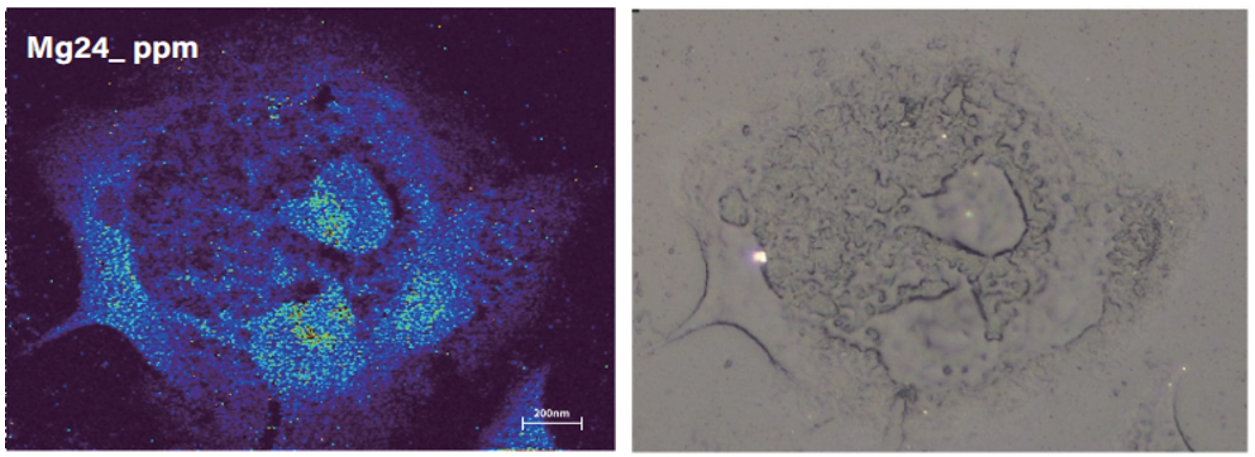
Sample: Tumor cells
Area dimensions: 129 × 99 μm
Spatial resolution: 200 nm
Pixels: 319,000
2. 12-slide batch loading. The platform features a 160 mm × 160 mm large-size sample stage equipped with dedicated cryogenic systems (stage and cryogenic platform dimensions customizable), accommodating larger dimensions or greater quantities of biological samples in a single batch to meet large-cohort sample testing requirements. The -40°C cryogenic cell is compatible with room temperature, fresh, and frozen sample ablation, maintaining original tissue morphology and elemental distribution.
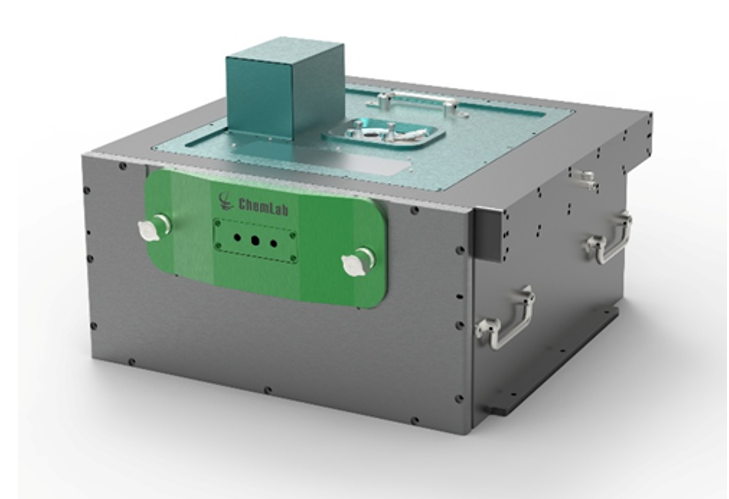
160 mm × 160 mm large-size dual-volume sample chamber
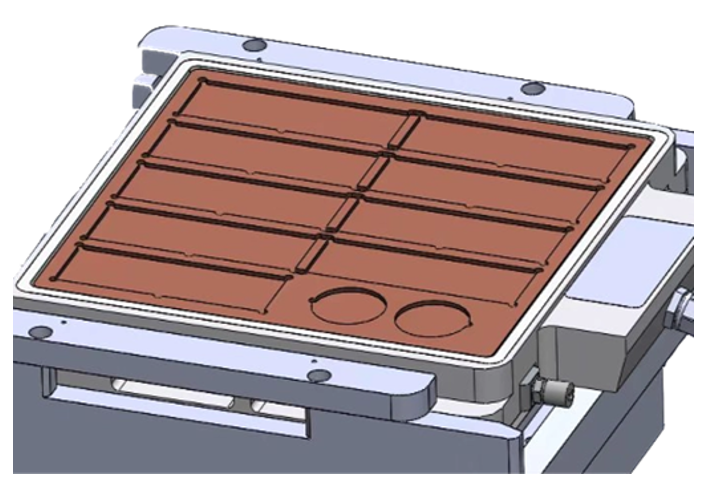
Cyrocell -40°C cryogenic cell
3. Multi-modal expansion. Supports integration with Laser-Induced Breakdown Spectroscopy (LIBS) and Coherent Raman Spectroscopy (CARS/SRS) systems, enabling correlated analysis of elemental distribution and molecular structure, providing technical support for comprehensive characterization of biological systems.
Technical Parameter Highlights
相关资料
Copyright 2024 Shanghai CHEMLAB Instrument Co., Ltd. All Rights Reserved
Shanghai ICP Filing No.65656565
 Contact us