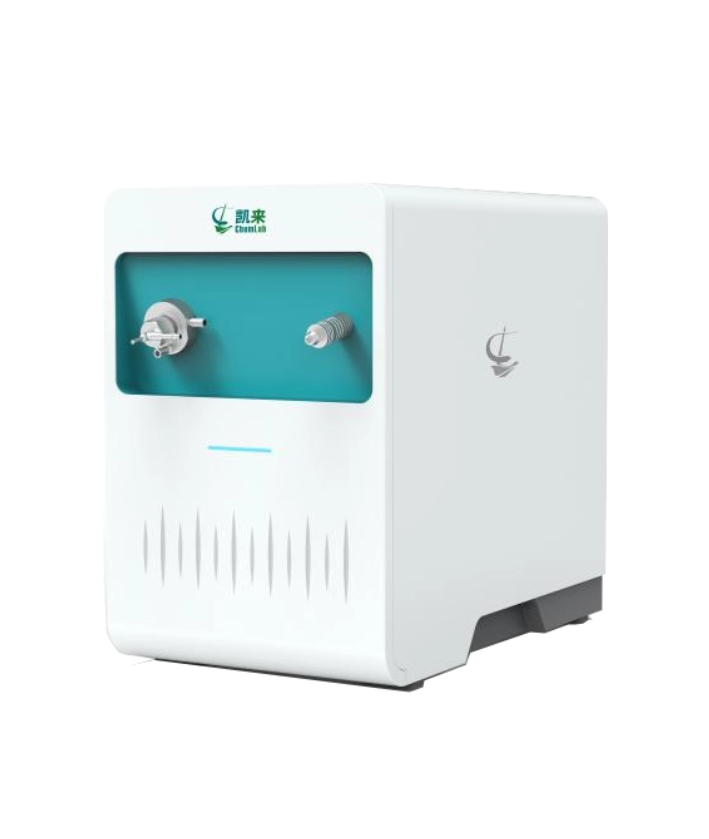


The DragonMaster high-efficiency membrane desolvation nebulization system is independently developed by Shanghai Chemlab Instrument Co., Ltd. and designed specifically for ICP-MS and similar instruments.Adopting innovative membrane desolvation technology, it not only significantly improves analytical sensitivity and accuracy, but also achieves breakthroughs in system reliability, anti-interference capability and ease of maintenance.It is suitable for high-demand analytical applications including environmental monitoring, life sciences, semiconductor materials and other fields.
 技术特点
技术特点
Challenges of Membrane Desolvation Technology in High-Precision Analysis
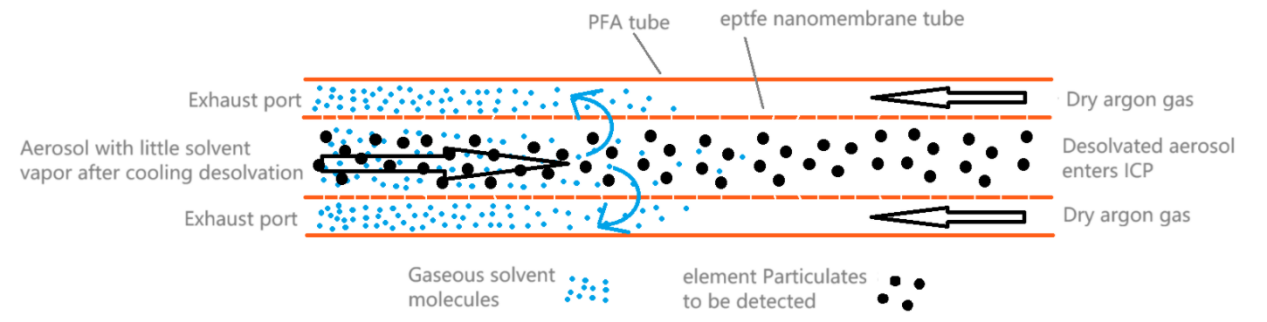
In inductively coupled plasma mass spectrometry (ICP-MS) analysis, solvents in the sample (especially water) tend to form polyatomic ion interferences and cause plasma instability after entering the plasma, thereby limiting the detection limit and data accuracy.Membrane desolvation technology efficiently separates solvents from analytes through the dual mechanisms of condensation and selective nanomembrane permeation, allowing nearly complete introduction of analytes into the plasma, thus greatly improving signal intensity and signal-to-noise ratio.However, achieving a highly efficient, stable, and easy-to-maintain membrane desolvation system still requires overcoming multiple challenges, including aerosol transport stability, long-term corrosion resistance of the system, and convenient maintenance of modular components.
1. Removable membrane desolvation module
Maintenance of conventional membrane desolvation systems often requires opening the main unit and disassembling multiple sets of tubing, which is time‑consuming and prone to incorrect operation.Featuring a patented removable membrane desolvation module, the DragonMaster can be easily removed directly from the rear panel of the chassis. Nanomembrane replacement can be completed without opening the main cover.
2. Electrostatic shielding technology ensures stable aerosol transport
During the transport of dry aerosols, static accumulation may lead to signal fluctuations and reduced reproducibility.DragonMaster incorporates a metal shielding mesh in the critical transport section, effectively isolating interference from external electrostatic fields and ensuring stable aerosol transport.
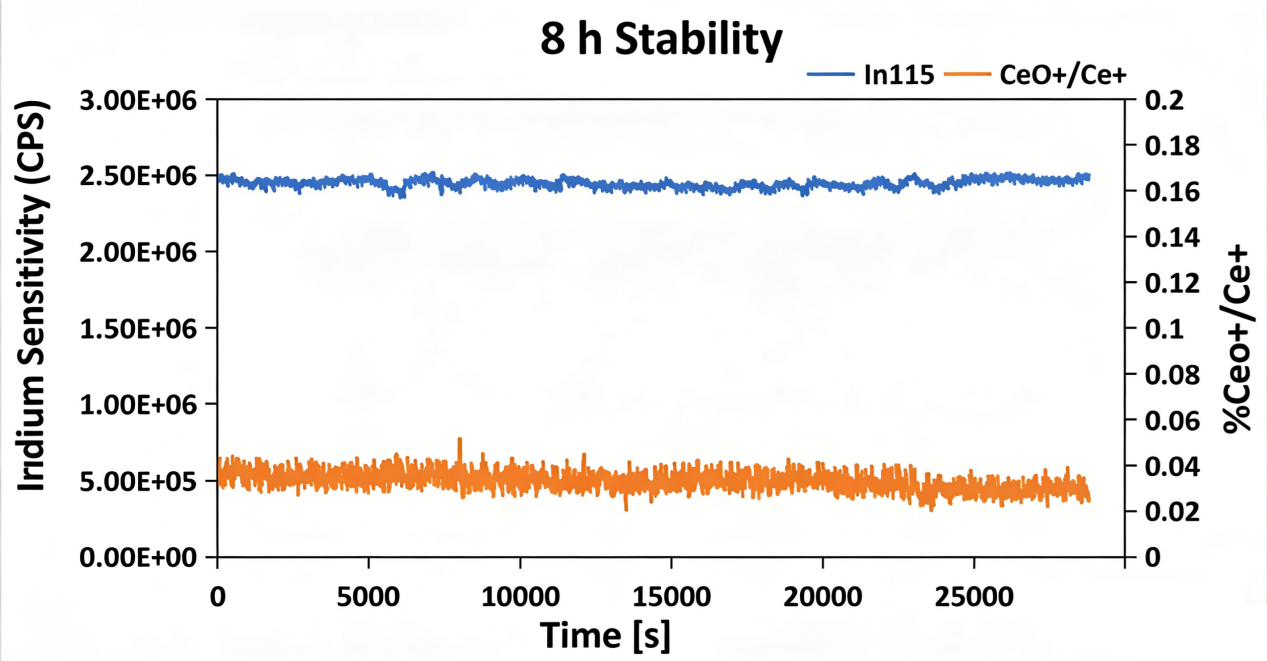
8-hour continuous sample introduction, stability with RSD = 1.4%
3. Ultra-low concentration sample quantification
When coupled with Agilent ICP-MS, it achieves excellent linear response for the calibration of Al, Mg, Cu, Fe and other elements at ultra-low concentrations ranging from 0 to 1.25 ppt, meeting the trace analysis requirements of environmental water samples, high-purity reagents and similar applications.
4. Intelligent cleaning procedure extends the service life of core components
The system features two built-in modes: rapid cleaning and full-system cleaning. Users can flexibly select according to usage frequency and sample matrix differences.This not only improves maintenance efficiency but also avoids cross-contamination and membrane clogging caused by residues, significantly extending the service life of the nanomembrane and nebulization system.


应用领域

We provide high-precision trace element determination services for geological samples, utilizing LA-ICP-MS, solution ICP-MS, and other advanced techniques to accurately determine elemental concentrations and ratios ranging from major to trace levels in rocks and minerals. Our services deliver critical geochemical data for petrogenetic studies, tectonic setting discrimination, metallogenic process tracing, and paleoenvironmental reconstruction
相关资料
Copyright 2024 Shanghai CHEMLAB Instrument Co., Ltd. All Rights Reserved
Shanghai ICP Filing No.65656565
 Contact us